2022
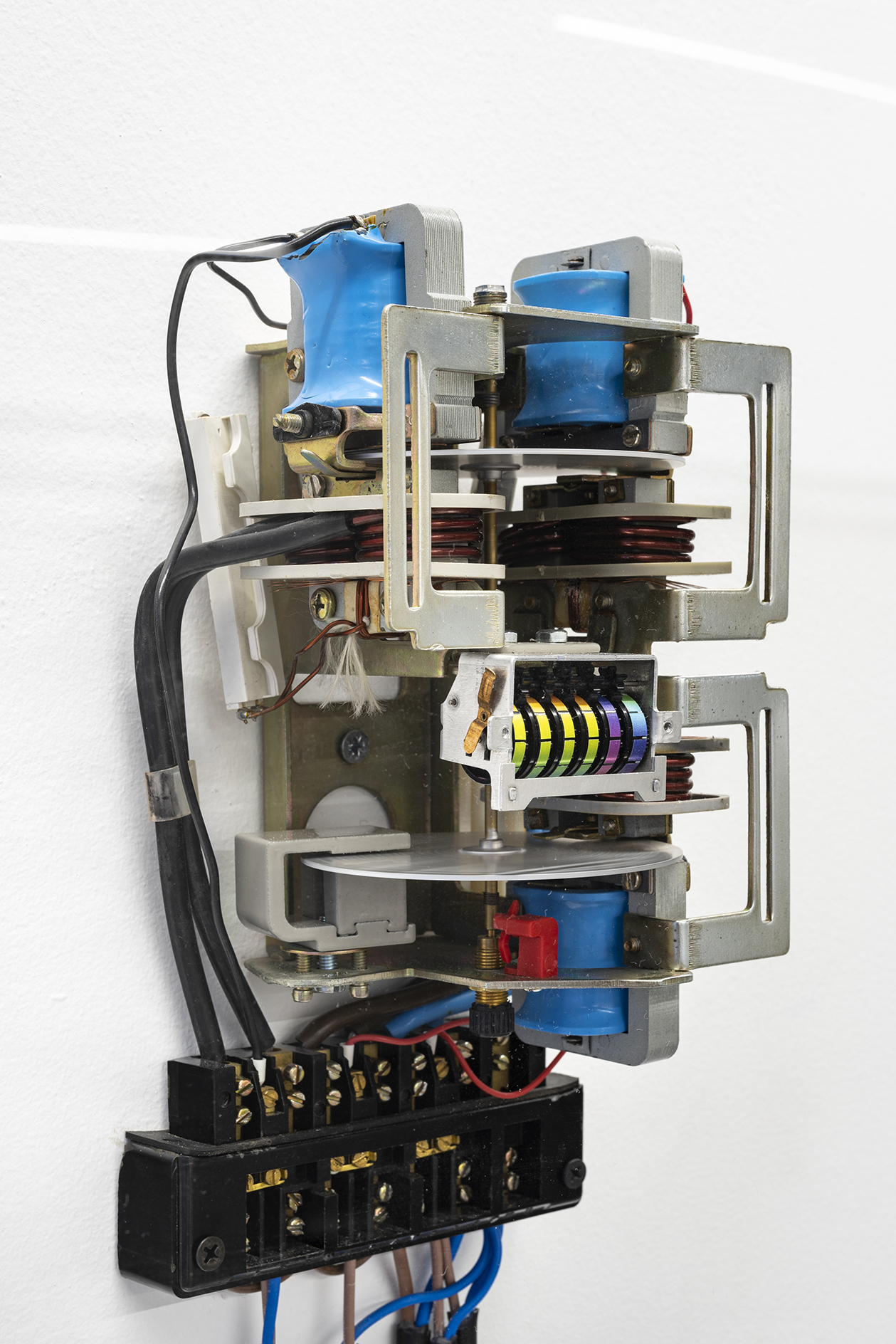
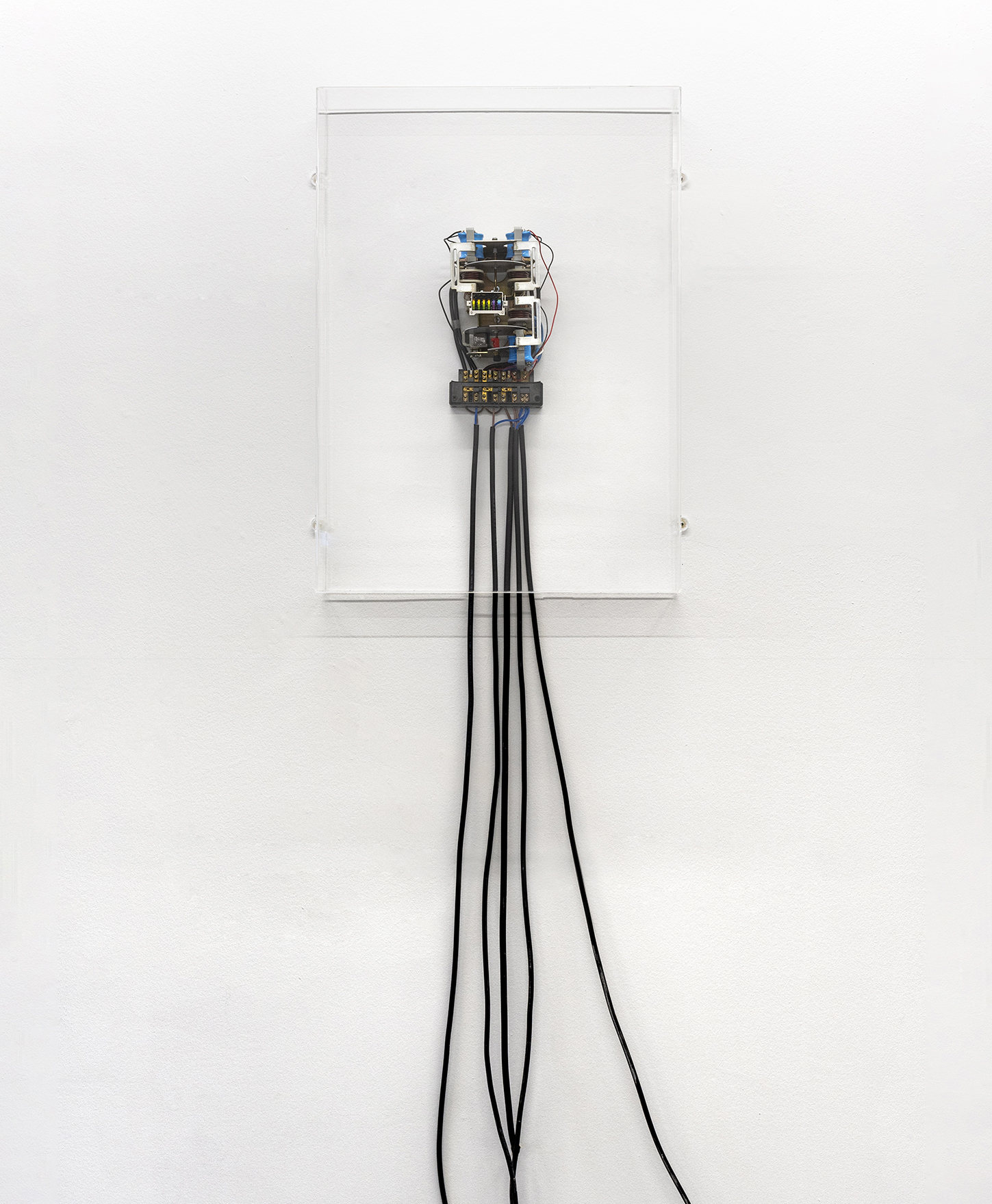
Burak Kabadayı renders the motion beyond the perceptible world visible with an electricity meter that measures the total amount of energy consumed per unit of time by all kinds of electrical devices used in the exhibition through the work titled.
Humans first recognize the metamorphosis in objects at the sensory level. However, physics asserts that changes in the perceived world are caused by non-perceptible changes. For example, the temperature change felt upon touching the texture of an object is caused by the particles changing positions at the molecular level more rapidly than before. Thus, it can be said that changes in perceptible temperature consist of indexical signs indicating the motion of non-perceptible objects.
Bertrand Russell emphasized in several works that although a person is able to know about the change in the perceptible world through recognition but it can only learn about the changes in the source underlying this data, which is the physical change, only through assumptions based on sensory experience. In other words, human has no direct access to neither the physical object nor the physical structure of the world or matter.
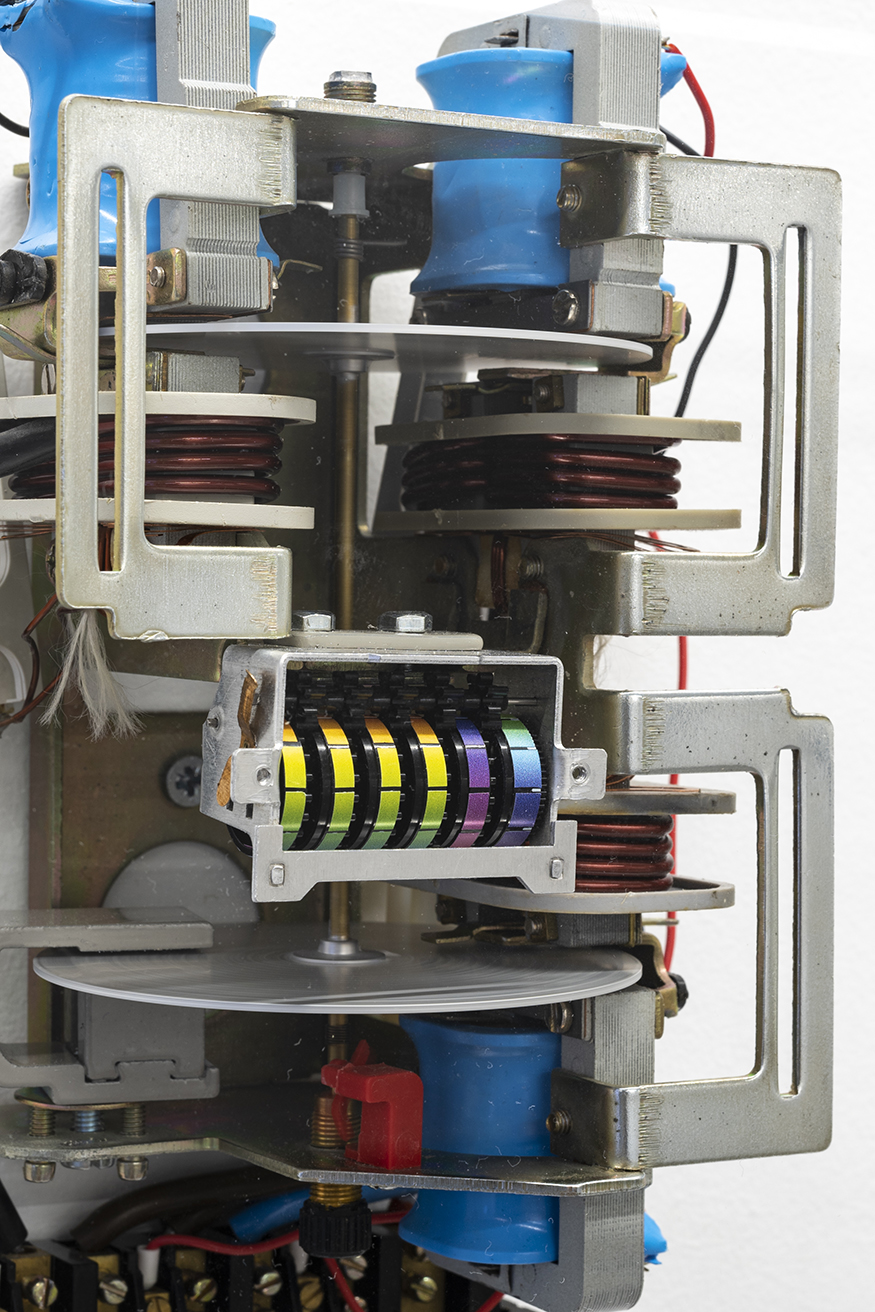
The approach Burak Kabadayı developed in his work titled “Suis Generis Vitae” (A Life of Its Own Kind) has parallels with this idea. We can become aware about some of the changes occuring within our field of perception for instance by seeing the metal wheel of an electricity meter gaining speed. However the energy consumption as the underlying effect causing the sensory changes is not a visible phenomenon. The energy consumption measured by the meter cannot be deduced by the sense data extracted upon visual observation. Hence, this occurrence can only be assumed by the observer. By using an analog electricity meter, Burak Kabadayı renders this phenomenon visible which otherwise would not be directly seen. Thus he emphasizes the causal relationship between the visible change (ie, the change in the meter) and its cause, the physical change (ie energy consumption).
Again, we do not have access to the causal relationship between these two events by sensory means. Although we are certain that the fast rotation of the metal wheel in the meter is caused by energy consumption, the correlation established between cause and effect is nevertheless based on an assumption. What we see is not a causal relationship, but two different events. The visible change in Kabadayı’s work enables us to visualize in our minds the energy consumption occurring in the exhibition space, an invisible occurence which we are certain that is happening. Therefore, by employing a mundane object such as the electricity meter, the artist provides a way to conceive the motion beyond the perceivable world in our minds. Yağız Özgen
–
The numeric display of the analog electricity meter installed in the exhibition space has been replaced with a color scale progressing from light to dark. The meter measures in real time the electricity consumed by the other works in the space and by the exhibition lighting. As energy consumption continues, the meter’s disc begins to rotate; this movement causes the initially ordered arrangement of the color scale to continuously transform. In this way, the installation both makes the momentary flow of energy in the space visible and produces a dynamic sequence of colors that changes in response to that flow.