2016
After to 20 is a work developed through the documentation of a biochar production process carried out in a village in Istanbul’s Northern Forests and its reconfiguration as a spatial installation. It examines the stages from the felling of a single tree to its transformation into charcoal, situating this process within methods of production, labor practices, and legal frameworks.
The point of departure of the project is a traditional production practice based on the cutting of young trees over twenty years old for biochar production. Trees are selected from areas where regrowth is possible; the cutting follows a cyclical logic aimed at maintaining the continuity of the forest. However, changes in regulations regarding tree cutting have restricted the forest workers’ ability to choose which trees to fell within their allotted parcels. The designation of specific zones for direct cutting has transformed the forest from a system that evolves through its own internal dynamics into a gradually shrinking production area. This situation directly affects both the continuity of the ecosystem and the livelihoods of the village.
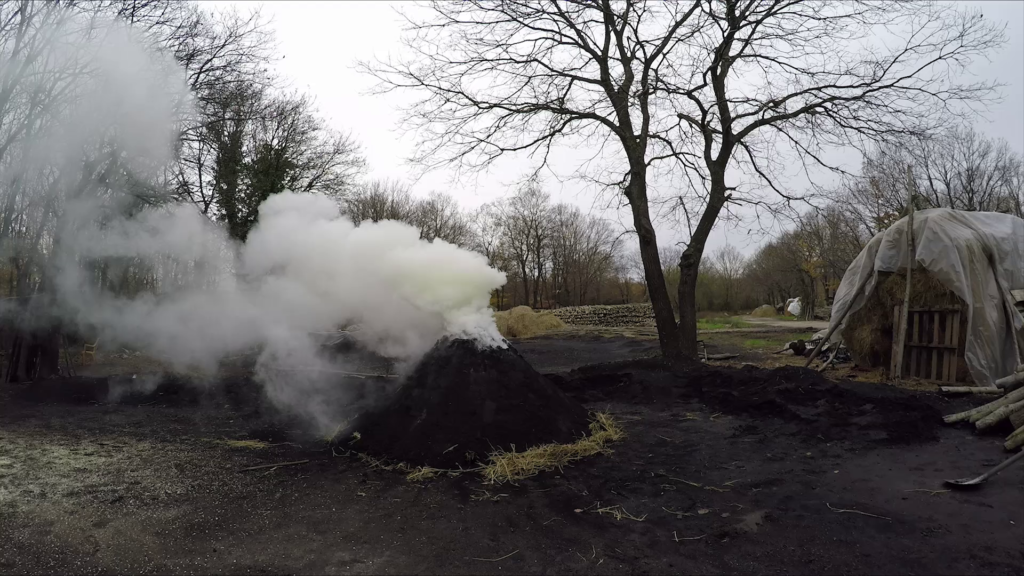
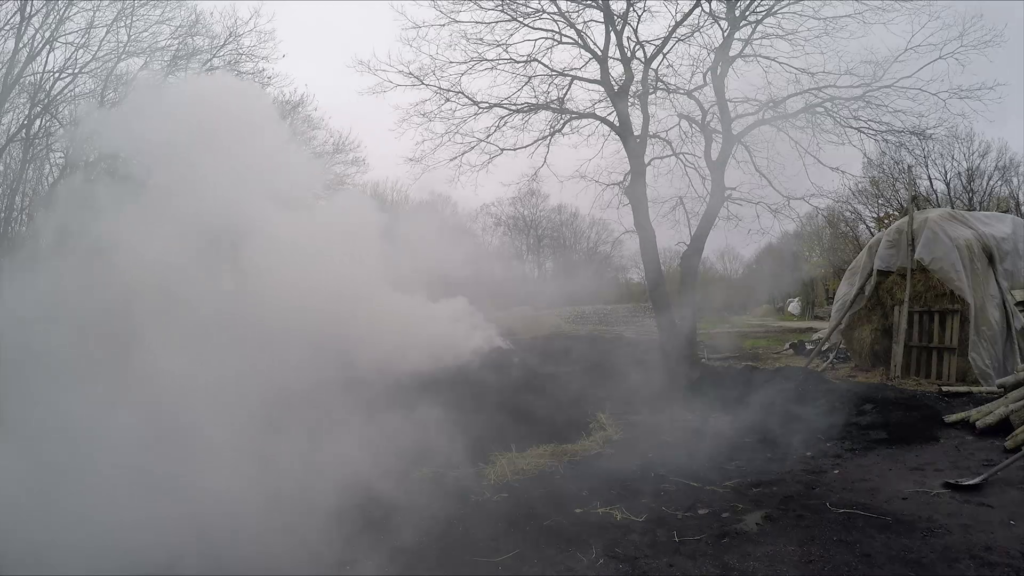
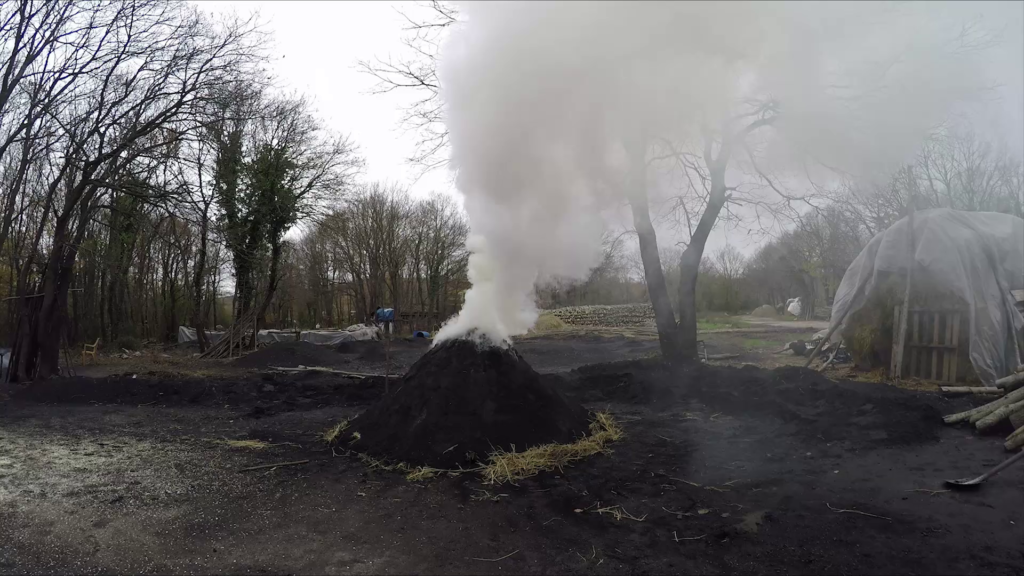
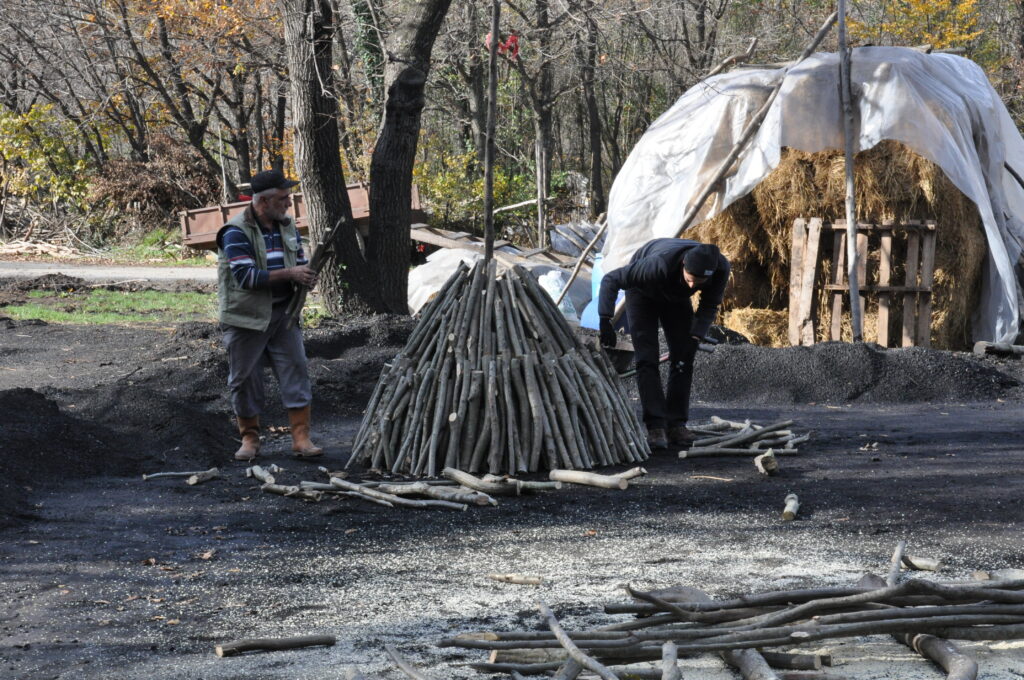
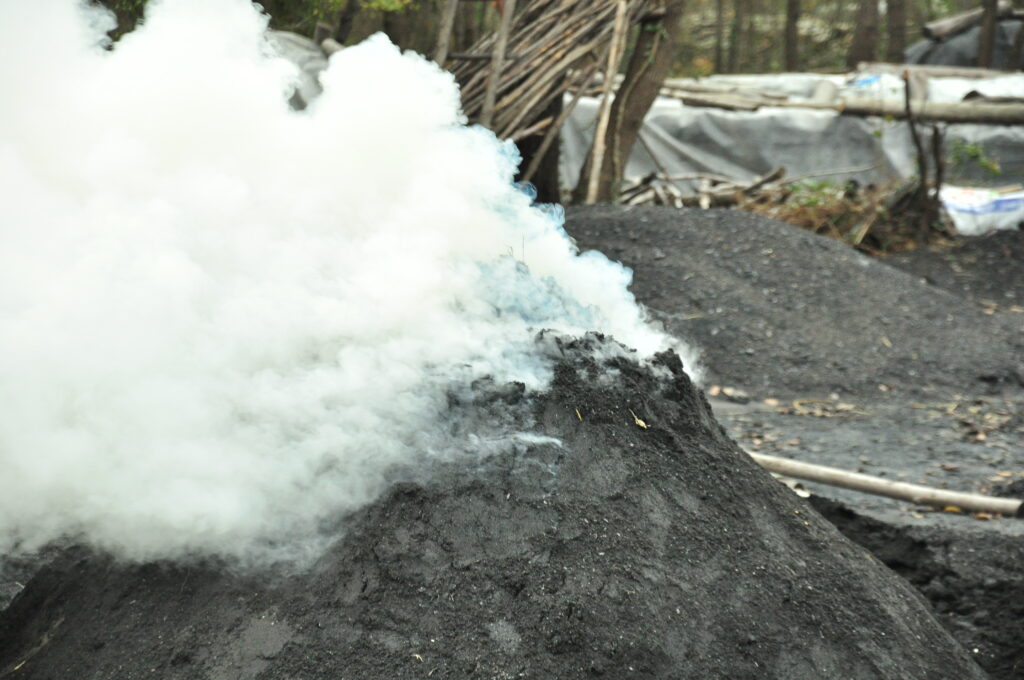
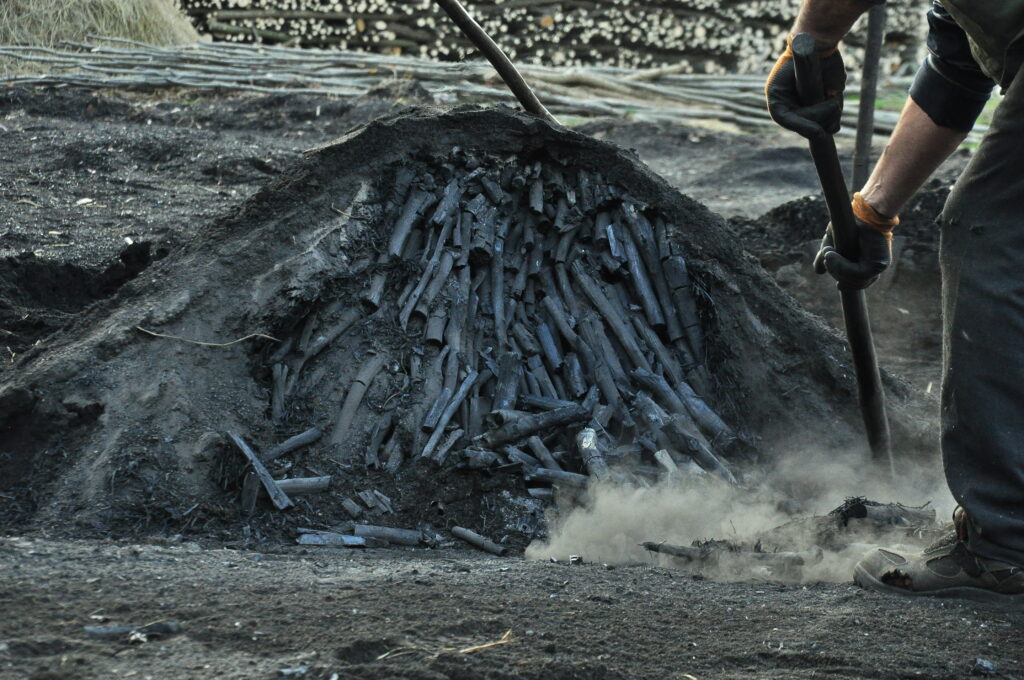
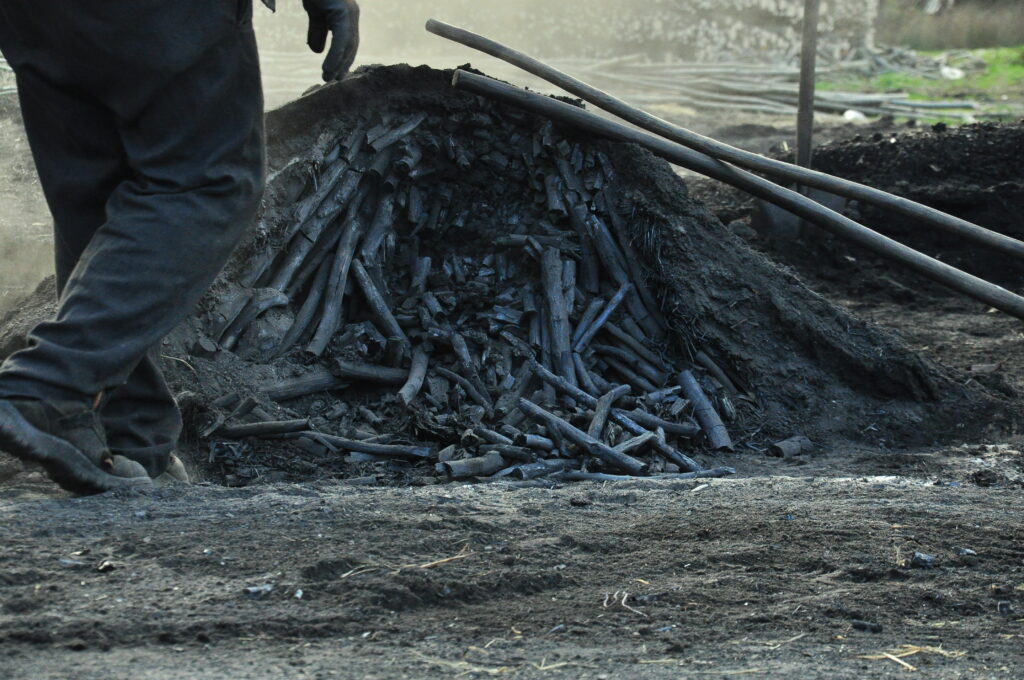
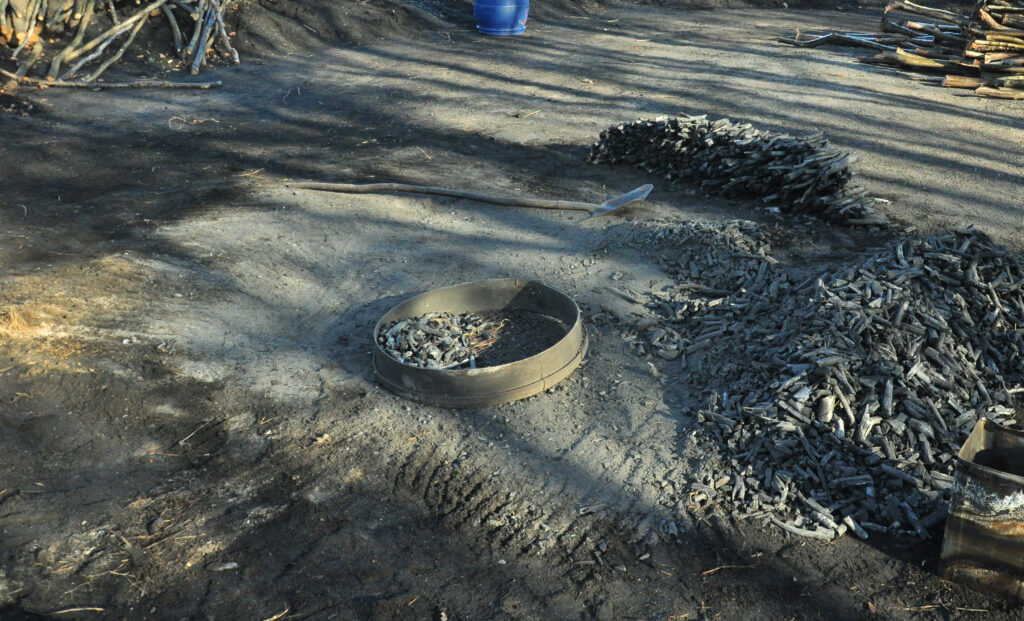
During the production process, the felled trees are cut into pieces and stacked in an inverted cone formation. The structure is sealed with straw and soil to prevent contact with air. Fire is introduced through an opening left at the center, and the wood is slowly smoked for approximately four to five days under controlled conditions. In this process, the wood does not burn; instead, it decomposes structurally in an oxygen-deprived environment, transforming into charcoal.
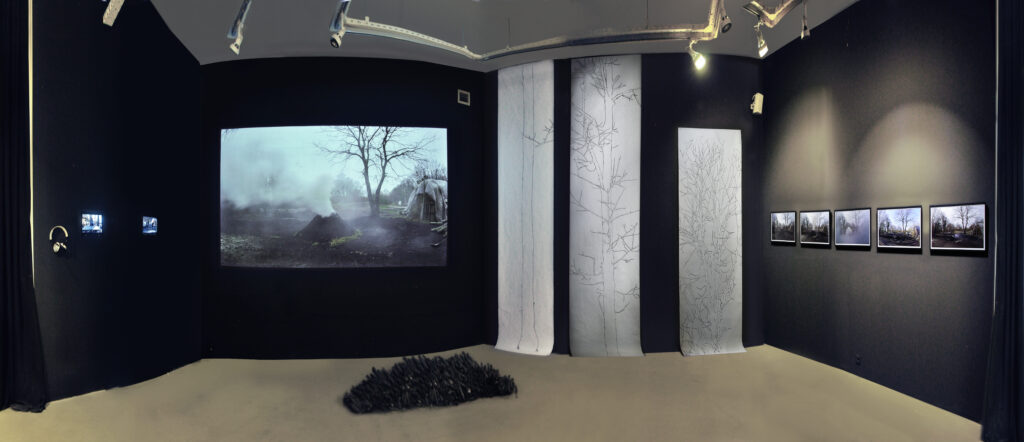
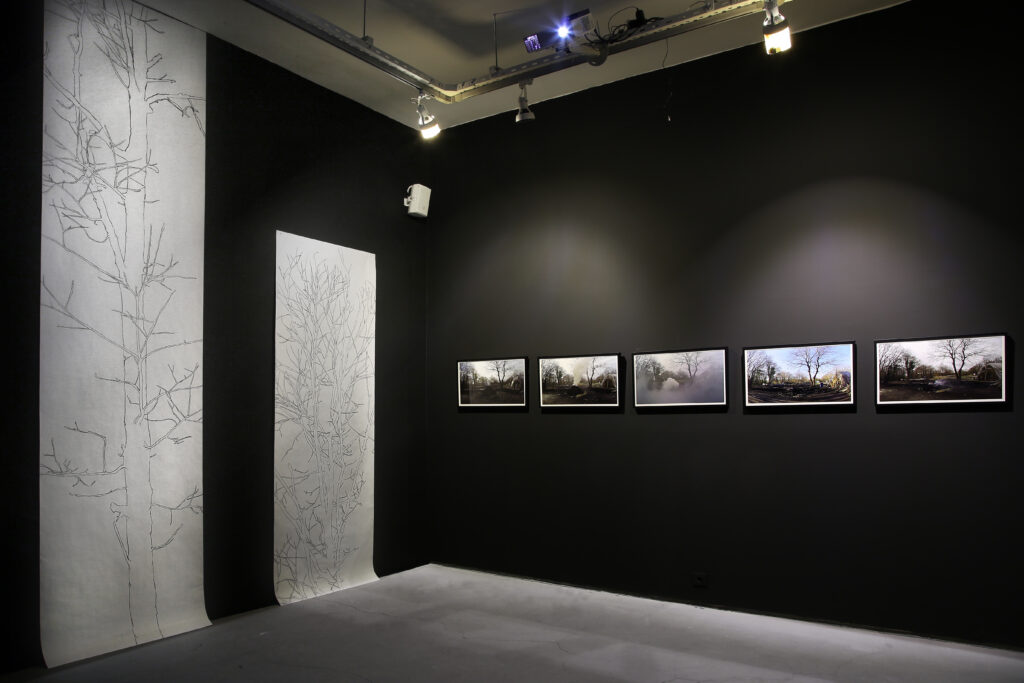
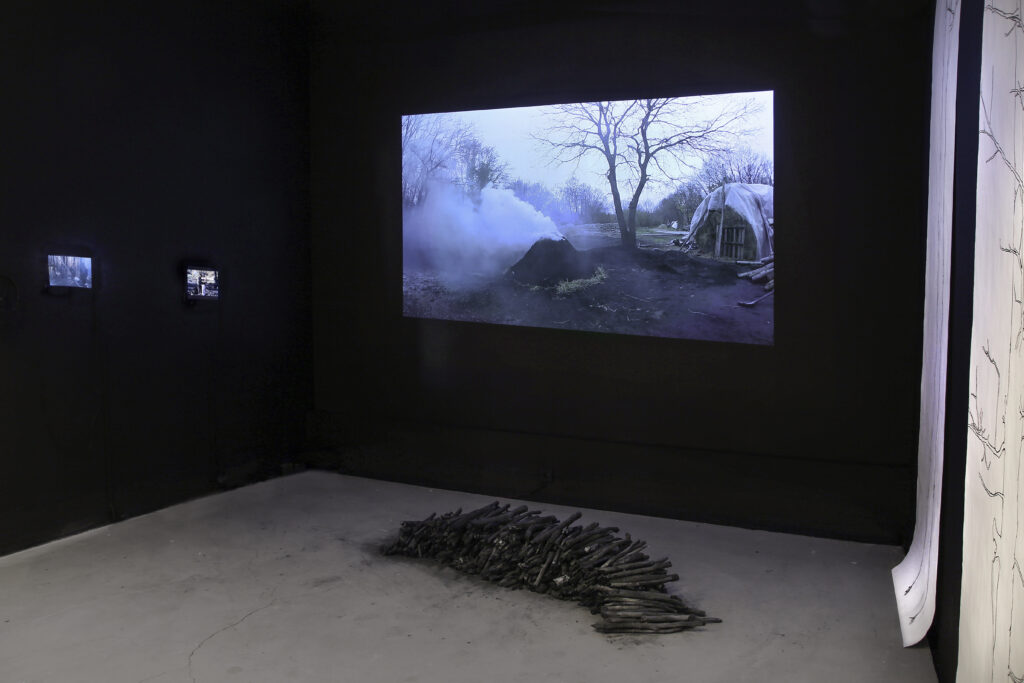
The installation spatially distributes different stages of this transformation process. The produced charcoal is placed at the center of the exhibition space and presented as a material that visitors are allowed to take and use. The same charcoal is also used to produce a technical, one-to-one scale drawing of a tree on paper. Rather than functioning as a representational image, the drawing is conceived as a trace formed by the tree’s own material.
The video work continuously presents the smoking process that occurs during biochar production. As the dispersion of the smoke and its movement through space are shown, the soundtrack carries the voices of forest workers describing the process. Moving images displayed on a tablet provide additional visual records of various stages of production. Five photographs mounted on the wall form a sequence documenting the gradual reduction of the log’s physical form over time.
After to 20 approaches biochar production not as a single object or end product, but as a process composed of fragmentation, transformation, and reuse. While recording the tree’s physical shift from a whole to a product, the work makes visible how this transformation is redistributed across spatial, temporal, and production conditions.